
Scientist's Toolbox Series
Ages 5–12
The Science Sparks Scientist's Toolbox Series is a unique, hands-on STEM program that introduces children to the real tools and techniques scientists use every day. While many science programs focus primarily on concepts, this series answers an equally important question: How do scientists actually investigate the world around them?
Every workshop combines demonstrations with extensive hands-on exploration, allowing children to use the tools themselves rather than simply watch them being used. Along the way, they develop essential scientific skills including careful observation, accurate measurement, data recording, graphing, interpretation of results, and communicating scientific findings. Children also maintain their own science journals and participate in Scientist Circle, where they learn to discuss and present their observations with confidence.
At Science Sparks, we don't just teach children science—we teach them how to do science.
This is a year-long Science Program offered in 5 Parts.
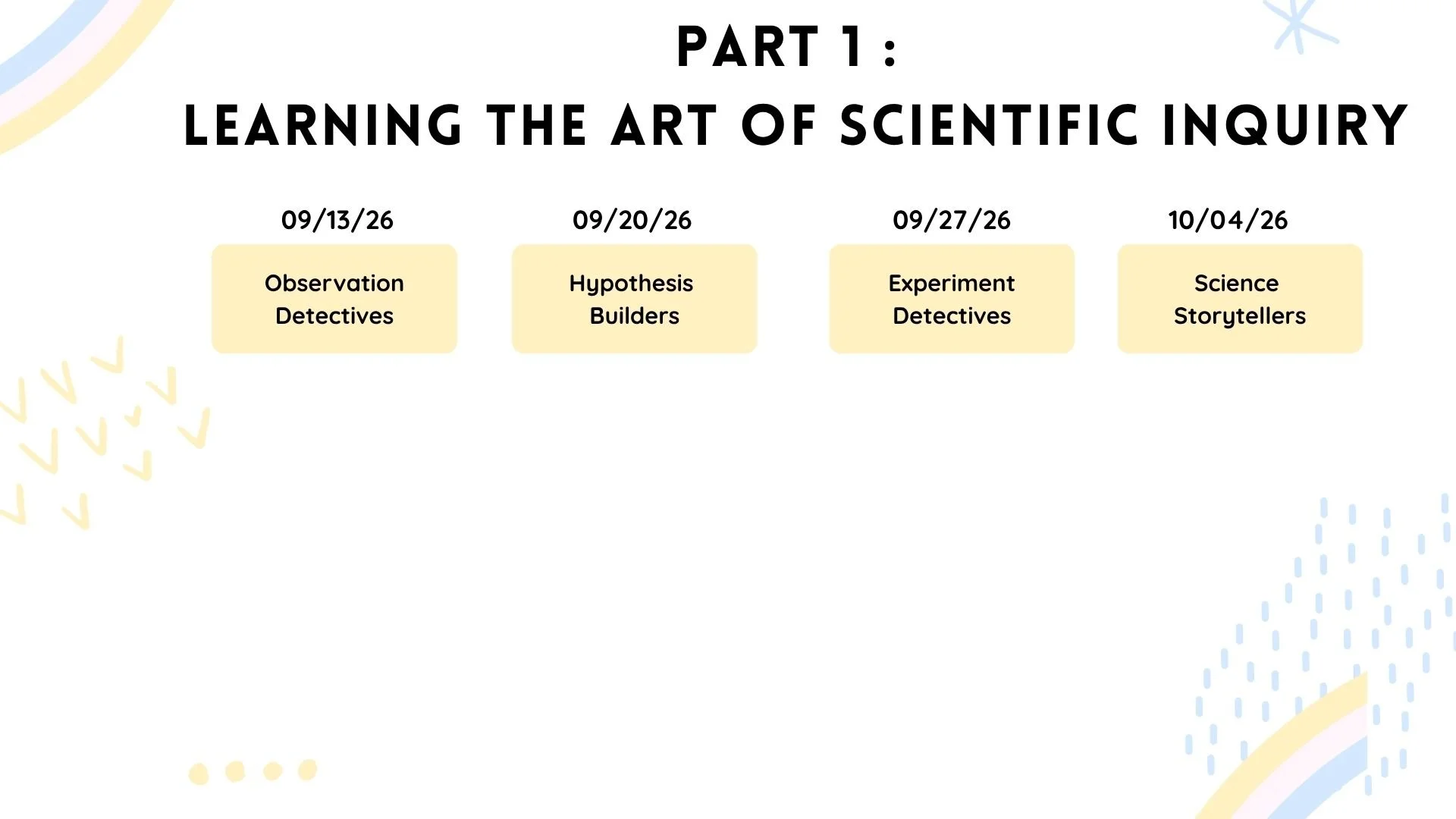
Part 1 (Weeks 1-4): Learning the Art of Scientific Inquiry
Part 2 (Weeks 5-14): Scientist’s Biology Toolbox
Part 3 (Weeks 15-19): Scientist’s Chemistry Toolbox
Part 4 (Weeks 20-30): Scientist’s Physics Toolbox
Part 5 (Weeks 31-35): Scientist’s Environmental Toolbox
Part 1 (Weeks 1-4): Learning the Art of Scientific Inquiry
Week 1: Observation Detectives
The Tool: Observation & Asking Questions
Big Idea: Scientists notice small details that other people miss. Observation is the first scientific tool.
Week 2: Hypothesis Builders
The Tool: Making Predictions
Big Idea: Scientists don't guess randomly. They use observations to make an educated prediction.
Week 3: Experiment Detectives
The Tool: Evidence
Big Idea: Scientists trust evidence. Not opinions.
Week 4 – Science Storytellers
The Tool: Scientific Communication
Big Idea: Scientists don't stop after making a discovery. They share it so other scientists can learn.
Week 5: DNA Detectives
The Tool: DNA
Big Idea: How do scientists use DNA to solve mysteries and improve lives?
Week 6: Tiny Worlds
The Tool: Cells
Big Idea: How do scientists use Cells to understand living things?
Week 7: Plant Detectives
The Tool: Plants
Big Idea: How do scientists use Plants to study climates and ecosystems? How are they used as genetic tools and medicines?
Week 8: Body Detectives I
The Tool: The Human Body
Big Idea: Explore and learn about the Human Body Systems
Week 9: Body Detectives II
The Tool: A Doctors Kit
Big Idea:How do scientists use measure the human body’s signals?
Week 10: Germ Detectives
The Tool: Germs (Bacteria, Viruses, Fungi and other germs)
Big Idea:How do scientists use germs as tools to study and find cures for diseases?
Week 11: Immunity Detectives
The Tool: The Immune system
Big Idea:How do scientists use the Immune system to develop medicines?
Week 12: Nature’s Engineers
The Tool: Biomimetic substances
Big Idea:How are scientists inspired by nature to develop innovations?
Week 13: Food Scientists
The Tool: Diet and Nutrition
Big Idea:How do scientists use diet and nutrition as a tool? How can food be a medicine by itself?
Week 14: Microscope Detectives
The Tool: Microscopes
Big Idea:How do scientists use microscopes?
Part 2 (Weeks 5-15): Scientist’s Biology Toolbox
Part 3 (Weeks 15-19): Scientist’s Chemistry Toolbox
Week 15: Chemistry of Change
The Tool: Chemical Reactions
Big Idea: Discover how chemists use chemical reactions to create new substances and solve everyday problems.
Week 16: Separation Techniques
The Tool: Scientific separation tools
Big Idea: Learn how scientists separate mixtures using tools like filters, magnets, and chromatography to recover useful materials.
Week 17: pH Detectives
The Tool: pH
Big Idea: Explore acids and bases by testing everyday substances with natural indicators, pH strips, and digital pH meters.
Week 18: Polymer Lab
The Tool: Polymers
Big Idea: Investigate the science of polymers by making your own slime and discovering how chemists design amazing new materials.
Week 19: Scent Lab
The Tool: Fragrances
Big Idea: Become a fragrance chemist by blending scents and creating a personalized perfume to take home.
Part 4 (Weeks 20-29): Scientist’s Physics Toolbox
Week 20: Time Detectives
The Tool: Timers
Big Idea:Measure, compare, and investigate how scientists use time to understand motion and change.
Week 21: Heavy or Light
The Tool: Weighing Balances
Big Idea:Learn how scientists measure mass using balances, scales, and precision weighing tools.
Week 22: Liquid Labmasters
The Tool: Liquid measuring tools
Big Idea:Discover how scientists accurately measure liquids using beakers, cylinders, pipettes, and syringes.
Week 23: Hot or Cold?
The Tool: Thermometers
Big Idea:Explore how scientists measure heat and temperature using a variety of thermometers.
Week 24: Mission Measure
The Tool: Length Measuring Tools
Big Idea:Measure the world around you with rulers, tapes, calipers, and measuring wheels like real scientists.
Week 25: Circuit Builders
The Tool: Electrical Circuits
Big Idea:Build real electrical circuits and discover how electricity powers the devices we use every day.
Week 26: Forces of Nature
The Tool: Gravity, Friction, Density
Big Idea: Investigate the invisible forces that make objects move, fall, and interact with the world around us.
Week 27: Sound Scientists
The Tool: Sound
Big Idea: Discover how sound is made, travels through different materials, and helps us communicate.
Week 28: Magnetism Explored
The Tool: Magnets
Big Idea: Explore the amazing world of magnets and how scientists use magnetic forces in everyday technology.
Week 29: Light Detectives
The Tool: Light
Big Idea: Investigate reflection, refraction, colors, and shadows to uncover the science of light.
Week 30: Glow Lab
The Tool: Fluorescence, Phosphorescence, Bioluminescence, Chemiluminescence
Big Idea: Discover the fascinating science behind glowing materials, fluorescence, phosphorescence, and chemiluminescence through hands-on experiments.
Part 5 (Weeks 31-35): Scientist’s Environmental Toolbox
Week 31: Space Explorers
The Tool: Planisphere & Moon Phase Wheel
Big Idea: Learn how astronomers use star charts and moon wheels to explore the night sky and our Solar System.
Week 32: Changing Earth
The Tool: Rock & Fossil Identification Kit
Big Idea: Discover how Earth's surface has changed over millions of years through volcanoes, earthquakes, fossils, and plate movements. Become a geologist by using rocks, minerals, and fossils to uncover clues about Earth's changing past.
Week 33: Nature Detectives
The Tool: A Field Journal
Big Idea: Become an ecologist by observing, sketching, and recording plants, animals, and habitats during an outdoor field investigation.
Week 34: Weather Watchers
The Tool: Weather Instruments
Big Idea: Measure temperature, rainfall, wind, and clouds using the same tools meteorologists use to study the weather.
Week 35: Map Explorers
The Tool: Maps and Compasses
Big Idea: Learn how scientists use maps, scales, symbols, and navigation tools to explore and understand our world.
Hands-on Tools
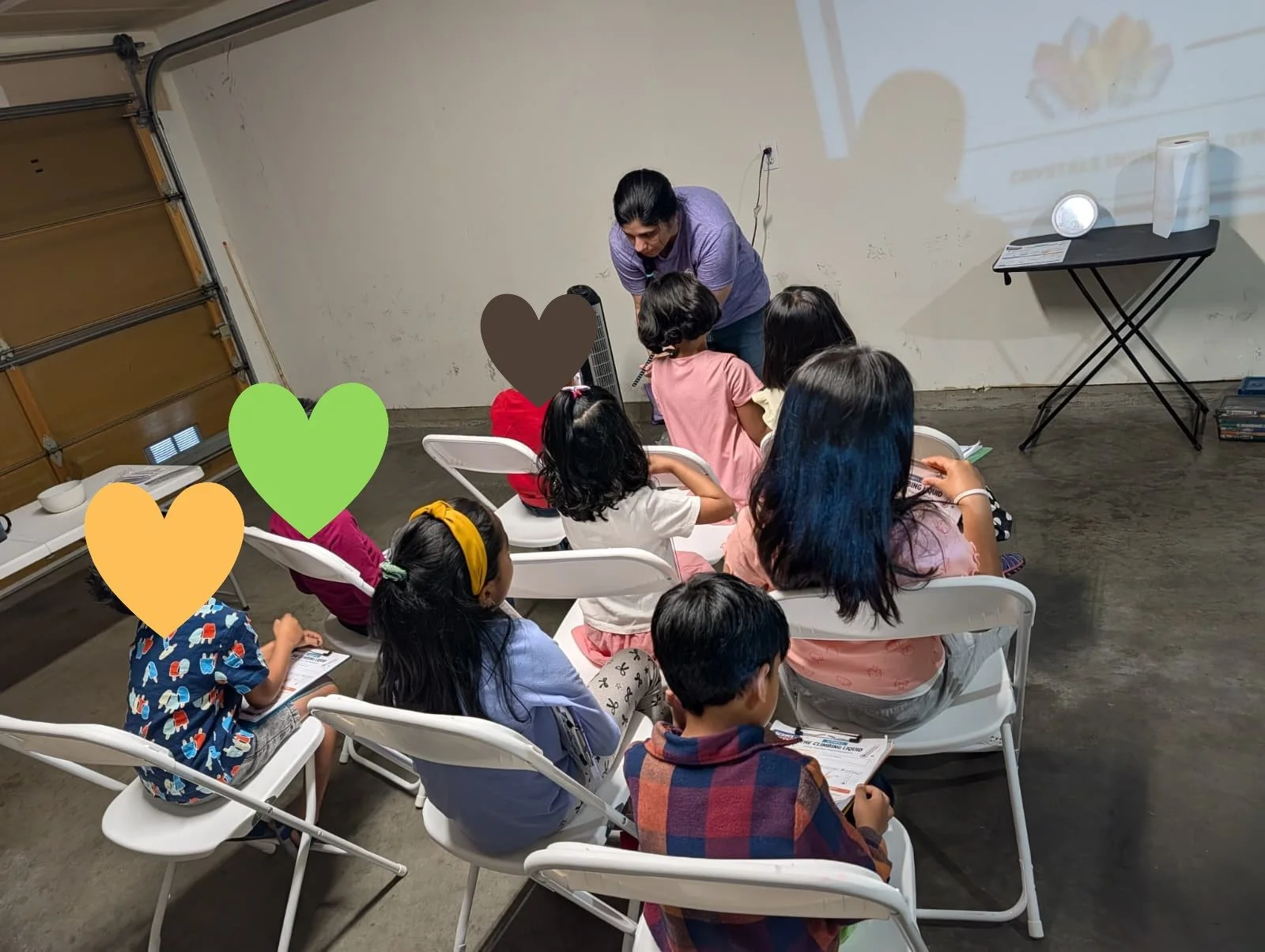
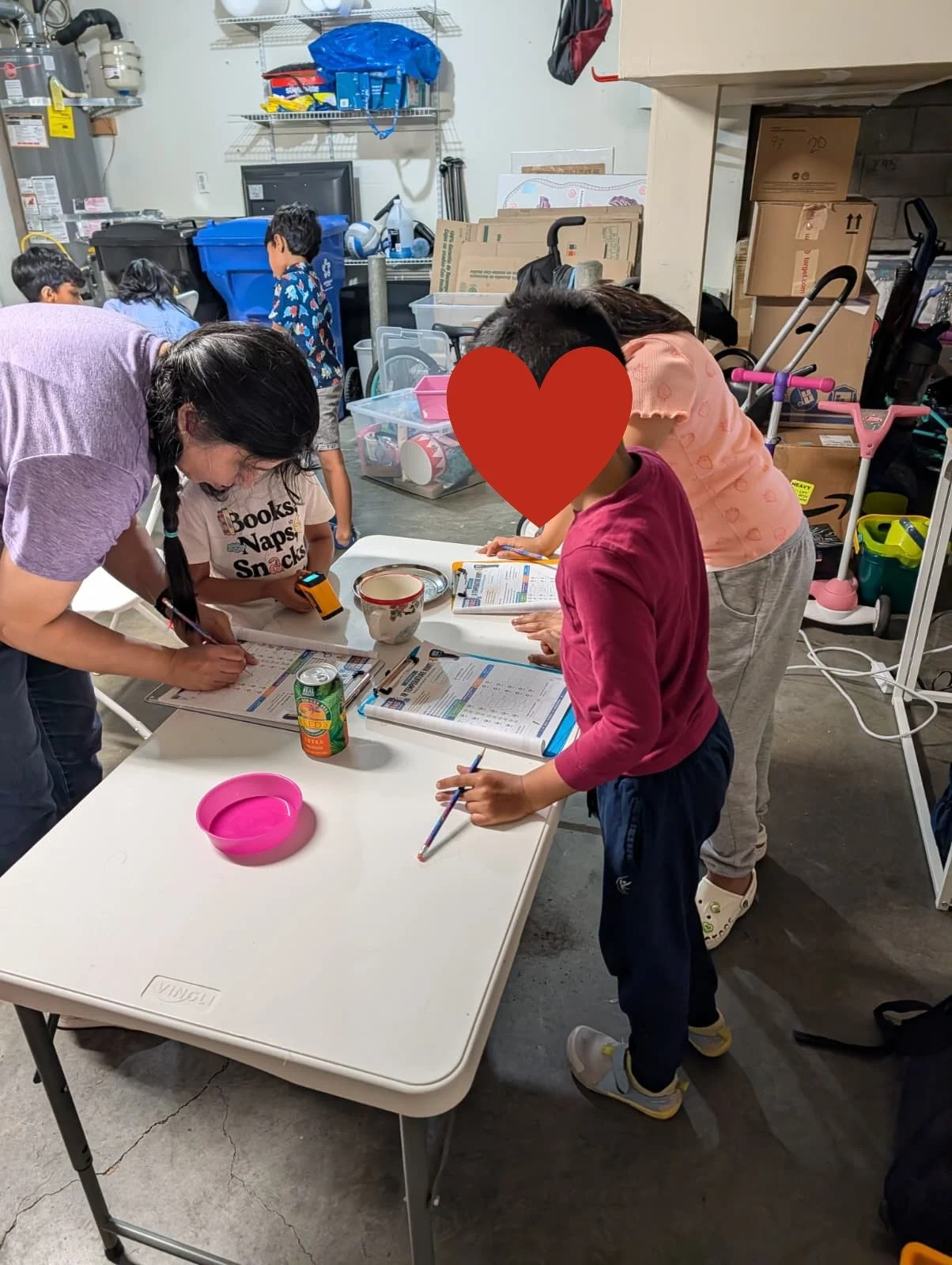
The Scientist’s Toolbox focuses on Scientific Tools that real scientists routinely use in the laboratory. Early exposure to understanding how these tools work, using them hands-on, experiencing problems that may arise during use, and troubleshooting-these are all aspects of science that are invaluable in training young scientists!
Laboratory Concepts
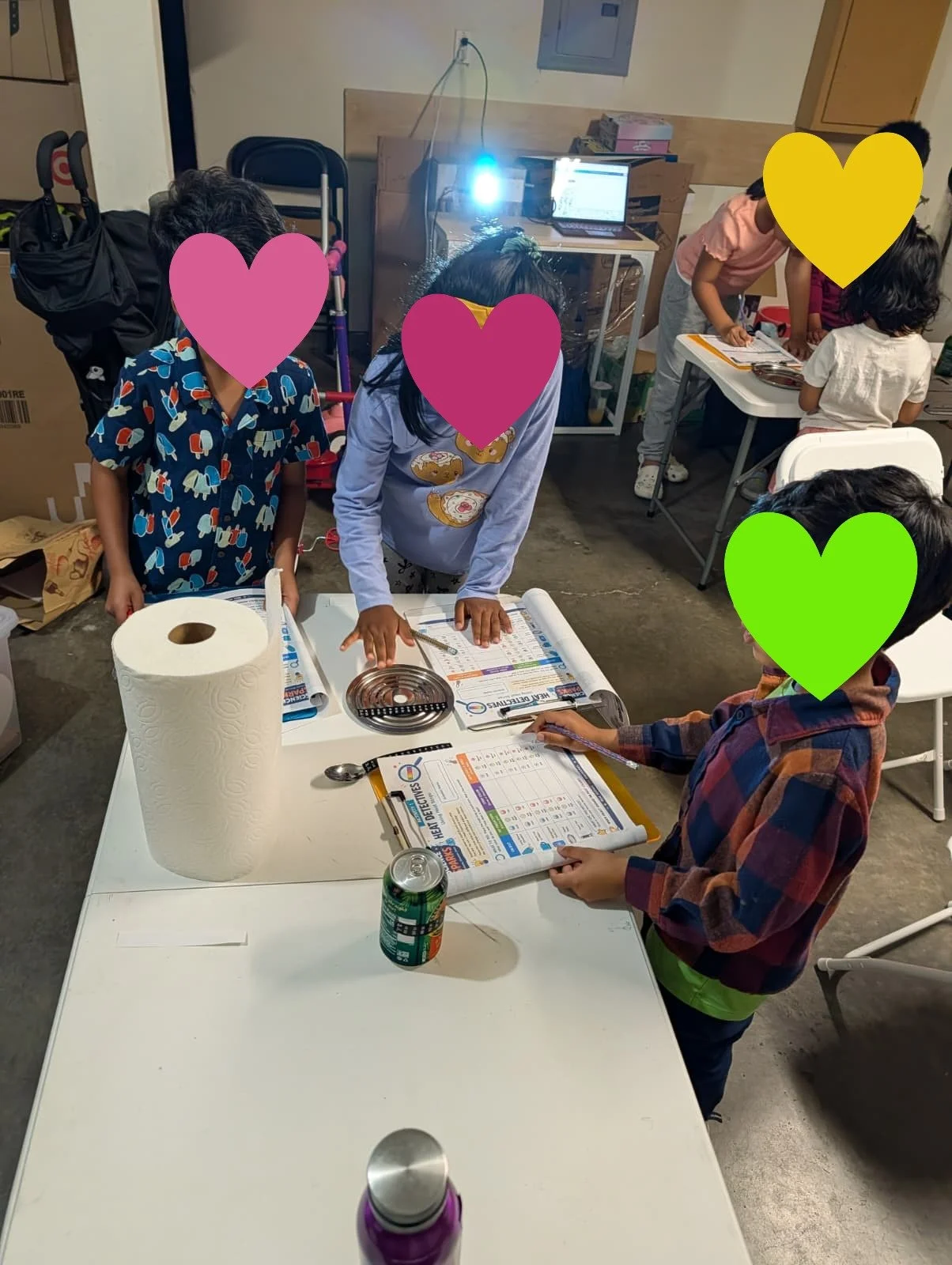
The Scientist’s Toolbox series, through the use of different scientific tools, introduces concepts that are core to a Laboratory. Examples include: replicates, deviations, predictions, estimates, and many more. This helps in building a scientific temperament early on!
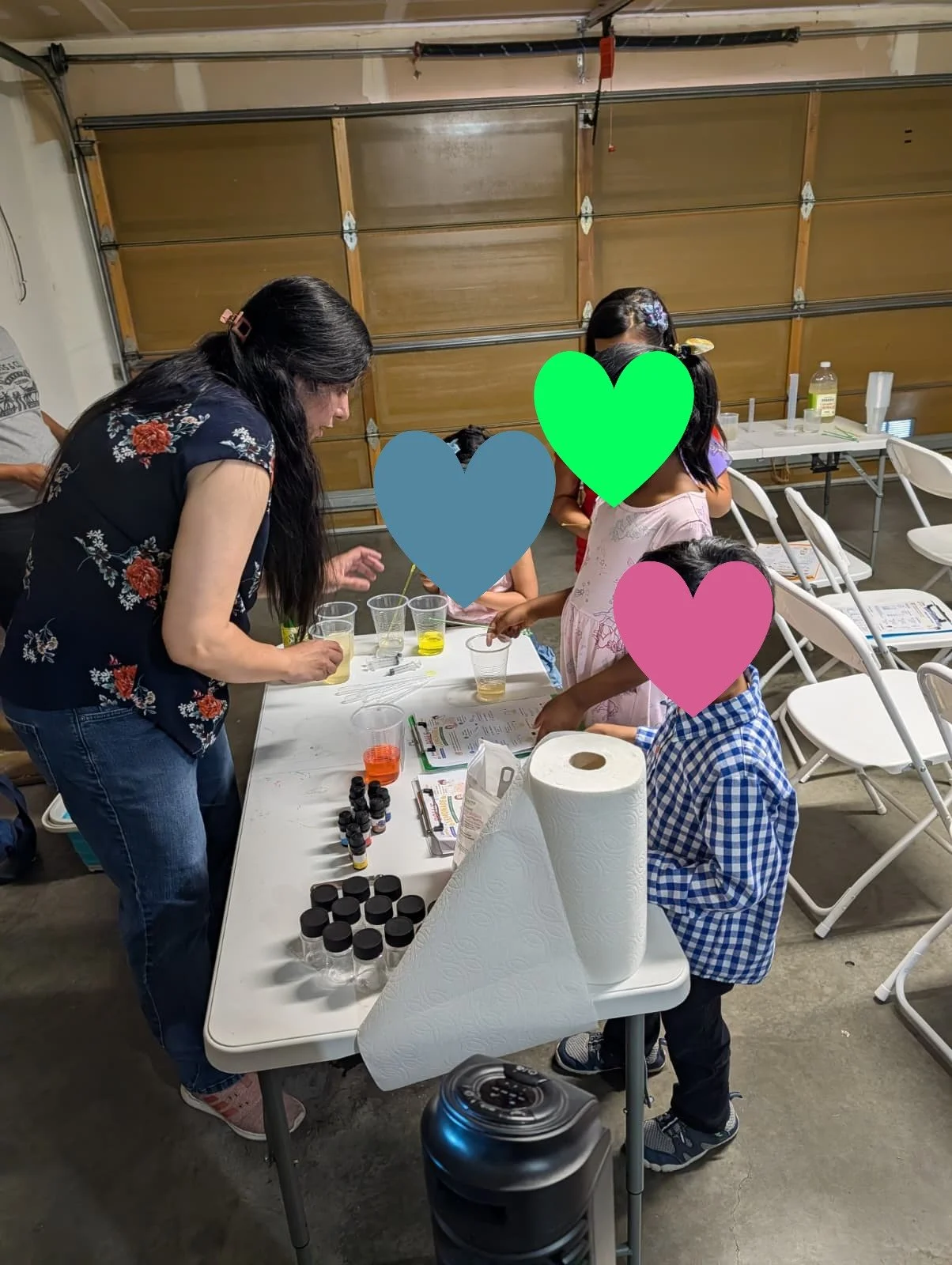
Scientific Temperament
Each workshop in the Scientist’s Toolbox series has different stations through which kids rotate. They are given a series of problems that they try to solve using the given tools and record data accordingly. This practice is very closely aligned with what Scientists actually do daily while working in laboratories across the world!
$30/Workshop
Discounts may be available for Full Series Sign-Ups and Siblings!